|
About the Articles Knowledgebase
|
ProZ.com has created this section with the goals of:
Further enabling knowledge sharing among professionals
Providing resources for the education of clients and translators
Offering an additional channel for promotion of ProZ.com members (as authors)
We invite your participation and feedback concerning this new resource.
|
|
|
|
|
Recent News
Featured Articles
»
This could spell trouble

|
A new orthography is gradually taking hold all over the Portuguese-speaking world. Translators need to know what lies beneath the reform, says Luciano Monteiro.
Luciano O Monteiro MITI is a writer and translator working from English and Spanish into Brazilian Portuguese. A former journalist, his main specialisation is football, though he also has a strong knowledge of world affairs, finance, marketing, tourism, IT and the media.
|
Recent Articles
»
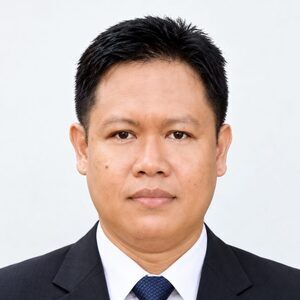
When “Provide” Means Availability, Not Delivery: A Contract Translation Example
|
This article examines how the English verb *provide* can require different Indonesian equivalents depending on its contractual function. Using an anonymized English–Indonesian contract example, it explains why *menyediakan* may be more accurate than *memberikan* when the clause concerns the availability of a service rather than its actual delivery. The discussion highlights the importance of contextual reading, semantic analysis, and event sequencing in legal translation, showing that precise translation depends not only on dictionary meaning but also on preserving the logic and relationships expressed in the source text.
|
»
Interpreting in Malaysia: Historical Development, Current Conditions and Future Prospects

|
The evolution of interpreting and translation in Malaysia, from the pre-islamic period to our current days and what may come after 2027.
|
»
Poza tłumaczeniem: co może ujawnić analiza wielojęzyczna i OSINT
By Bartosz Pelka
| Published 09/7/2026
| Technology , Getting Established , Marketing Your Language Services , Miscellaneous , Translator Education , Other Specialties , Translator/Client Matching , Other , Polish , News , Opportunities | Not yet recommended

|
Większość pracy wywiadowczej i w OSINT kończy się na angielskim. To, co naprawdę ciekawe, zaczyna się tam, gdzie tłumaczenie w ogóle nie powstaje — na przykładzie jednego cyberataku i pięciu języków pokazuję, ile ta luka faktycznie kosztuje i dlaczego na ten sam problem trafia się w due diligence, wywiadzie konkurencyjnym i ocenie ryzyka.
|
»
Beyond Translation: What Multilingual OSINT Can Reveal
|
|
Most OSINT and intelligence work stops at English. The interesting part starts where translation never happens at all — using one cyberattack and five languages to show what that gap actually costs, and why due diligence, competitive intelligence and country risk all run into the same problem.
|
»
Seven Hundred Languages and a Font Problem

|
Indonesia has more than 700 living languages, and keeping them alive requires two different things that people tend to conflate: a record and a speaker. The record side runs into concrete obstacles — scripts that reached Unicode late or, like Pegon, not at all; Javanese material trapped in legacy fonts that no search engine can read; thousands of digitized *lontar* sitting as images because nobody has transliterated them; recordings labelled too vaguely to be useful. On the technology side, roughly ten of those 700 languages have usable corpora, and the parallel text that does exist is mostly scripture, which teaches machine translation a sermon register unfit for a tenancy agreement. That gap is where translators have a stake: orthography decisions, terminology for modern domains, legal and medical register, evaluation standards, and control over who gets to train on an elder's voice. But none of it makes speakers. Digitization buys time; only a household passing the language to a child keeps it alive.
|
No articles found.
|
|


 printer version